
January 27, 2026 • 5 min read
What makes pumped storage hydropower critical for the energy transition
As electricity systems gradually decarbonize, governments are focusing on harnessing nature’s power to build a more sustainable future. The shift from thermal generation (burning fossil fuels like coal and gas) to renewable energy sources is essential to protecting the planet.
But as we transform how energy is produced, we must also ensure the systems that power our lives remain reliable and resilient.
Energy storage made simple
New innovations are being developed to capture energy from the wind, sun, rivers, ocean tides and even geothermal sources. These renewable, low-carbon technologies rely on the elements, which introduces a challenge.
What happens when the sun isn’t shining or the wind isn’t blowing?
There is a clear need to devise efficient, economical, methods to store excess renewable energy in times of plenty and release it to the grid when needed. Pumped-storage hydro (PSH) is one such solution – and a powerful one.
With the growing supply of energy from intermittent renewable sources, PSH plays a vital role in balancing the grid and ensuring stability.
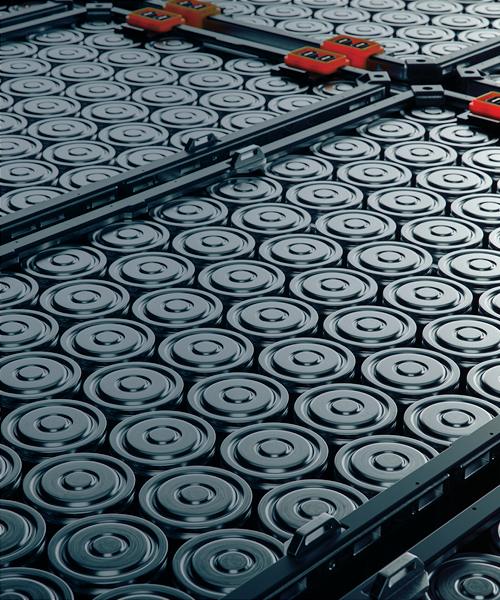
In fact, 95 percent of energy storage capacity worldwide is already enabled by PSH. Unlike batteries, which usually provide two to eight hours of storage, PSH typically delivers six to 20 hours, making it the only proven long-duration storage technology at grid scale.
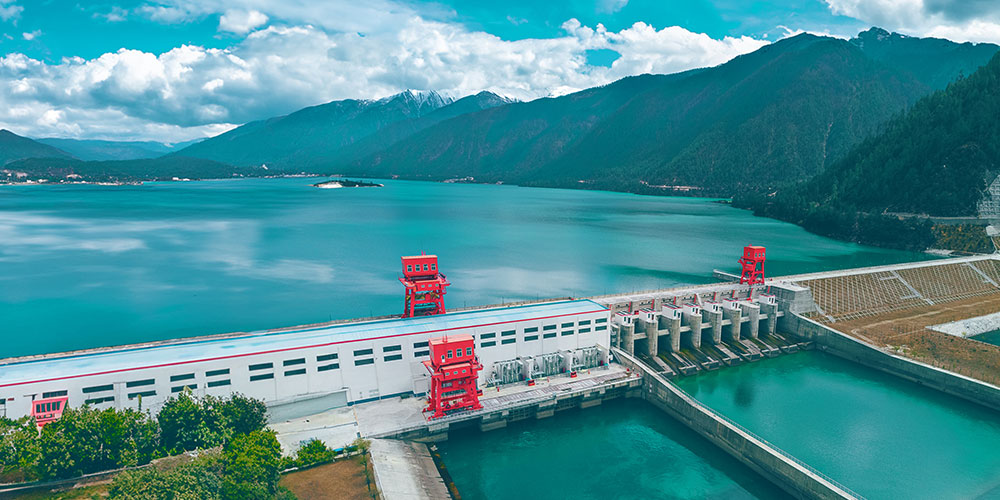
Let gravity do the hard work
Electricity must be consumed as soon as it is generated. Intermittent generation from solar and wind often does not match demand for power, and a surplus or deficit results. When it’s a surplus, grid operators must find off‑takers.
Surplus energy generated during periods of low demand results in low to negative local marginal pricing, and grid operators must either pay an off‑taker to receive that energy, or curtail output.
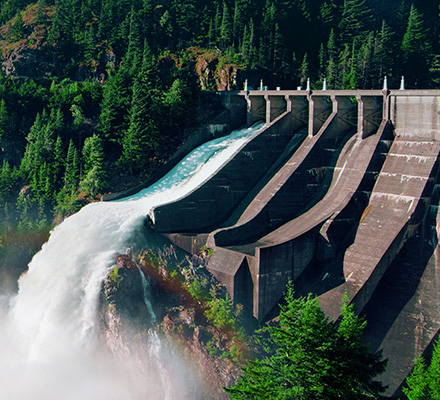
One of the best ways to convert intermittent electricity to energy that can be dispatched when needed is through the release of water stored in a PSH facility.
PSH uses reversible pump turbines that can operate as generators or as pumps. If renewable electricity is used to pump water into an upper reservoir, it can be stored as potential energy.
When renewable energy sources like wind and solar aren’t performing, the water in the upper reservoir can be released to drive turbines so that the potential energy is converted back into electricity.
This is the same concept behind hydropower, but in that instance the water travels in only one direction.
Providing more to the grid than electricity
Hydropower, especially PSH projects, also provide important grid stabilization services that are not available from solar or wind alone. These ‘ancillary services’ include spinning reserve, non-spinning reserve, frequency regulation, reactive power support and black-start capability. PSH also provides inertia and voltage support thanks to its rotating turbines.
Regional transmission operators (RTOs) and independent system operators (ISOs) rely on ancillary services from hydro to keep the grid stable as more intermittent generation is added. Ancillary services represent an important revenue stream paid to pumped‑storage system operators by RTOs and ISOs.
What obstacles might be found around the bend?
A PSH project is not without its technical challenges. From our experience in supporting the development of hydroelectric dams, one of the first challenges to address is project planning.
Planning includes selecting a location, which includes serious consideration of water supply, water rights, right‑of‑way/land acquisition and configuration of the system to minimize its environmental impact. Planning also must consider the geotechnical and hydrogeological context to ensure cyclic storage between reservoirs and the movement of millions of cubic meters of water per day.
The ease of construction of dams, closed tubes or tunnels called penstocks, reservoirs, turbine/generators and pipelines is of paramount concern.
As with any major energy facility construction project, costs can overshadow savings in operations and maintenance if they are not controlled.
An adequate transmission connection to the regional grid is also crucial.
In addition, there is a need to consider long-term asset operations and maintenance as part of the lifecycle cost of a project. Fortunately, hydropower facilities have the advantage of very long lifecycles compared to other energy storage and generation facilities.
Hydropower isn’t a new concept
Hydroelectric facilities have reliably supplied electricity in many countries for more than a century.
Roughly 60 percent of all renewable electricity and more than 16 percent of the world’s total electricity generation comes from hydropower (International Hydropower Association, IHA). Of this, around 170 GW comes from pumped storage specifically, which accounts for approximately 95 percent of all grid-scale storage worldwide.
Every dam project comes with social and environmental risks
There are inherent risks any time a project interacts with freshwater resources and aquatic habitat. This poses greater risk in regions where environmental regulators, Indigenous peoples and local stakeholders have a large say in project success (for example, in Australia, Brazil, Canada, and the US). Impacts on the environment and society are vital considerations in every project we support.
Furthermore, non-technical risks can be posed by regulatory or stakeholder issues. As with any project that relies on water use, developers will need permits, licenses and water rights support. In many jurisdictions, projects must undergo an impact assessment that considers climate resilience and mitigation planning.
We can help in those areas and in developing the local benefits associated with a PSH facility, such as water supply, recreational use, habitat enhancement or flood control.
Long-term environmental and social consulting in Brazil
For over a decade, our team has supported a major energy developer in Brazil with comprehensive environmental and social, and engineering solutions throughout the lifecycle of a large hydropower project. Beyond securing permits and ensuring ongoing compliance, Worley delivered critical infrastructure – including road, bridge and port construction, waterfront and linear park developments, river beach enhancements, and urbanization projects encompassing sanitation, earthworks, lighting, energy distribution, and public facilities. We also conducted traffic studies and led coordination and management of socio‑environmental plans, programs, and projects.
Our expertise extends to designing and implementing programs for Indigenous and riverside communities, supported by institutional strengthening, socio‑economic monitoring, and stakeholder management. This holistic approach has enabled more than 40 socio‑economic initiatives addressing urban and rural resettlement, public health, education, and tourism support. Through integrated urban planning and sustainable development practices, we continue to help stakeholders meet regulatory requirements while creating lasting positive impacts for neighboring communities.
Expert guidance for critical projects
Our experts support all aspects of PSH, and our power and water experts have a long history of supporting hydroelectric dam projects in conjunction with our environment and social scientists.
We’ve helped our customers to overcome obstacles and delivered power, dam and reservoir conceptual studies, feasibility analyses, design, permitting, Indigenous, stakeholder and community engagement worldwide. Including planning for water supply, flood control, land use and recreation.