April 15, 2026 • 2 min read
The importance of water for
battery production
High-purity water for high‑performance batteries
From mining to manufacturing, battery production relies heavily on high‑purity water and effective wastewater management.
Batteries themselves do not consume water during operation, but their production is water intensive. Water is required throughout the value chain – from mining and refining battery minerals to manufacturing and recycling.
As global battery demand is expected to increase more than twelvefold by 2030 to meet the goals of the Paris Agreement on climate change, the challenge is not only securing enough raw materials. It is also ensuring these materials are sourced responsibly and produced using sustainable water management practices.
Meeting this challenge requires producing ultrapure water for battery manufacturing, recovering valuable chemicals from wastewater streams, and optimizing how water is sourced, used, treated, and reused across operations.
Producing ultrapure water and recovering value
Battery manufacturing relies on ultrapure water, often referred to as deionized (DI) water, which is essential for sensitive production steps.
Ultrapure water used in battery production is typically defined by ionic conductivity below 0.1 microsiemens per centimeter (µS/cm) – significantly purer than natural rainwater. Increasingly, manufacturers are targeting even stricter specifications, including ultra‑low organic carbon content (below 30 µg/L) and conductivity approaching 0.055 µS/cm, the theoretical limit for pure water.
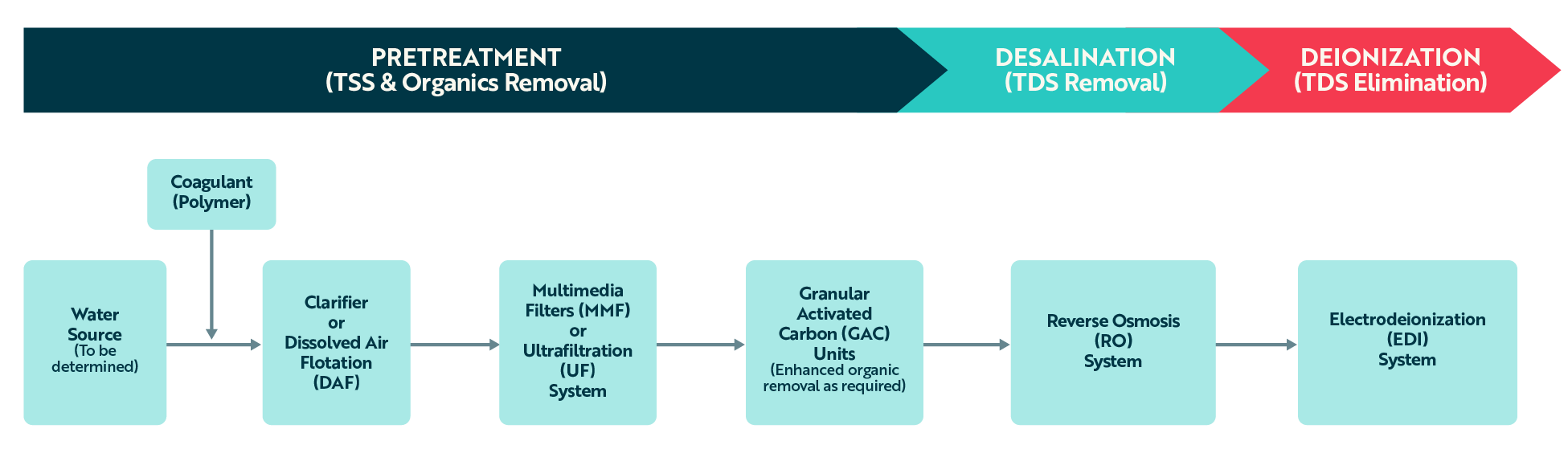
Producing water at this level of purity at industrial scale requires advanced treatment systems. Typical treatment trains combine multiple technologies such as membrane filtration, granular activated carbon, reverse osmosis, and polishing steps like ion exchange or electro-deionization.
Hover to zoom. Click to view larger (opens in a new tab). Tap to view larger (opens in a new tab).
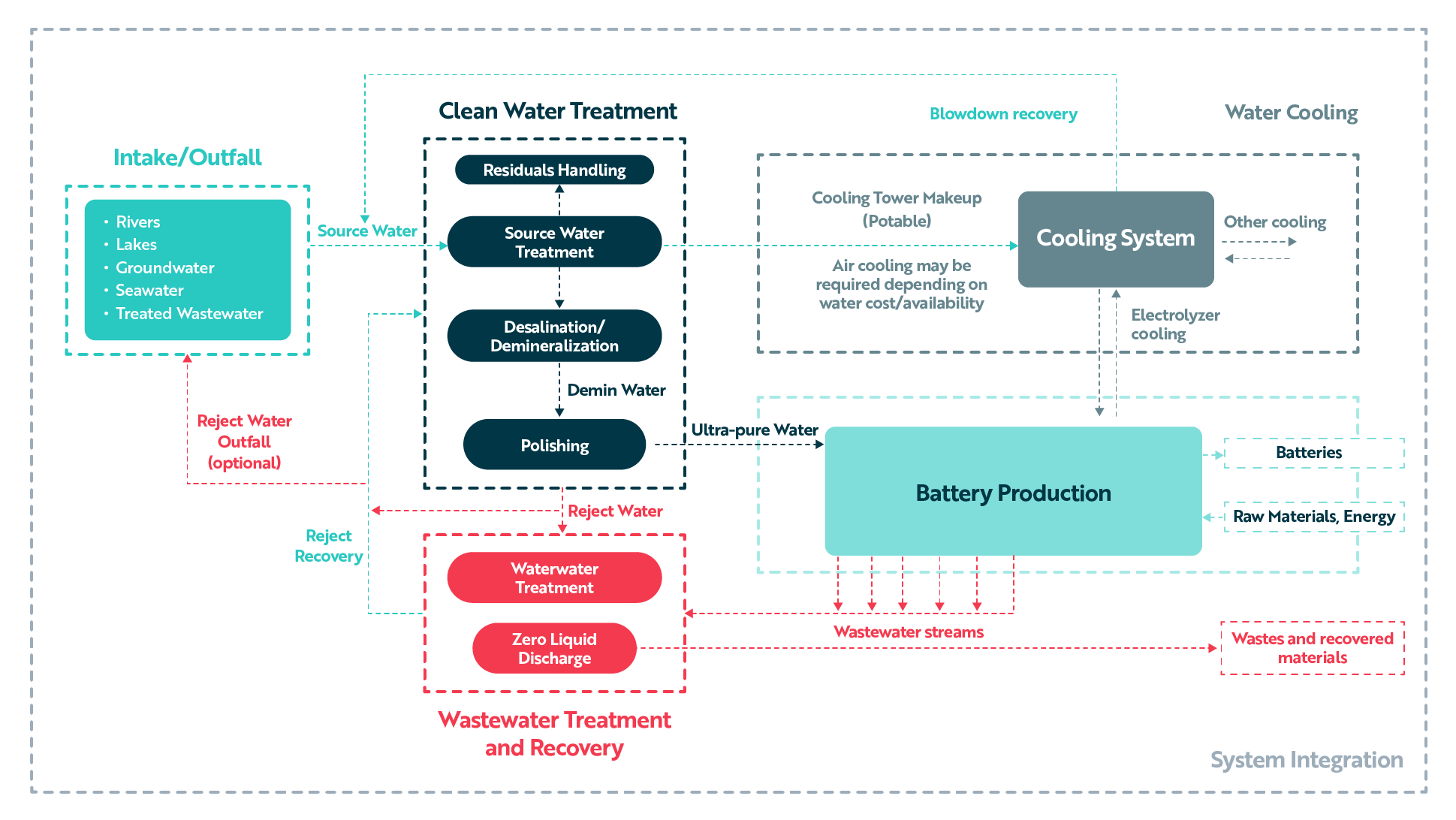
At the same time, battery manufacturing generates a range of wastewater streams throughout the process. These streams can originate from electrode preparation, equipment cleaning, cooling systems, and material refining operations. Wastewater may contain dissolved salts, metals, solvents, and residual process chemicals, requiring specialized treatment before discharge or reuse.
Rather than treating these streams solely for disposal, modern water management strategies increasingly focus on reuse and resource recovery. With the right treatment technologies, wastewater can often be purified and reused within the facility for processes such as rinsing, cooling, or utility water supply. This reduces freshwater demand while improving overall water efficiency.
Advanced treatment systems can also enable facilities to:
- recover valuable chemicals and dissolved minerals
- treat wastewater for reuse within the plant
- reduce freshwater consumption
- meet strict environmental discharge requirements.
These approaches help transform wastewater from a liability into a resource, improving both environmental performance and operational efficiency.
Hover to zoom. Click to view larger (opens in a new tab). Tap to view larger (opens in a new tab).
Rethinking water sources
Securing sufficient water supply is another key consideration for battery projects.
Beyond conventional freshwater sources, facilities increasingly explore alternative water supplies, including treated process water and reclaimed industrial water.
Reusable water may come from:
- internal process streams within the battery plant
- adjacent industrial facilities
- municipal reclaimed water systems.
These strategies reduce reliance on freshwater resources while supporting more resilient and sustainable operations.
Water stewardship for the energy transition
The rapid expansion of the battery industry will depend not only on materials and technology but also on how effectively water resources are managed.
Water management must be integrated into the design and operation of battery facilities from the start. With growing pressure on global water resources, responsible water stewardship is essential.
A proactive approach enables manufacturers to:
- meet sustainability commitments
- improve operational efficiency
- reduce costs
- protect local water resources.
As the energy transition accelerates, responsible water management will play a critical role in enabling sustainable battery production.