June 15, 2026 • 6 min read
The offshore renaissance: From restraint to resilience
After more than a decade of restraint and underinvestment, confidence is returning to the offshore industry – not as exuberance, but as measured optimism grounded in capital discipline and execution certainty.
Capital is returning, exploration is back on the table and offshore is once again being recognized as one of the fastest, most effective ways to add reserves at scale. But unlike previous upcycles, this resurgence is defined by selectivity, a clear focus on returns, execution discipline and smarter strategy.
“There’s real energy in the industry, with anticipated capex investment at levels we haven't seen in 10 to 12 years,” says Mike Buck, Senior Vice President of Upstream, Midstream and LNG. “This year feels like a return to standard offshore development – but with far greater discipline than before.”
The industry isn’t repeating the past; it’s applying hard lessons learned around volatility, cost escalation and delivery risk that shape how projects move forward.
The emphasis is now on delivering value faster, more predictably and with greater confidence.
Key takeaways
- Portfolio-first mindset
Offshore growth is being driven by existing assets, not mega-projects. - Capital efficient delivery models are key
Speed to market depends on modular designs, replication and smarter delivery models. - Digital needs to deliver
Implementations focus on improving reliability, performance and decision-making at scale. - Technology is reshaping operations
AI, robotics and remote technologies are reducing risk and improving asset efficiency. - Global delivery models
Work is moving from site-based teams to connected global delivery; unlocking speed, consistency and growth. - Built in, practical sustainability
Emissions reductions are being designed in from the start, focusing on economically viable, resilient solutions. - A more mature offshore market
The next wave will be led by those who integrate economics, engineering and execution to deliver value faster and smarter.
1. Offshore’s comeback is portfolio‑led, not project‑led
Offshore development is regaining prominence, but the decisions behind investments have fundamentally changed. “The quickest way for operators to add reserves is to go back into their existing portfolio,” says Buck.
Rather than pursuing mega-scale developments with long‑tail returns, operators are accelerating value through tiebacks, near‑field developments and hub-and-spoke models that maximize existing infrastructure. “There’s been such an underinvestment in upstream offshore,” Buck says. “If you want to add reserves, you have to invest capital, and for a long time that simply hasn't been happening.”
Many offshore assets have been underutilized and undermaintained. Revisiting and reinvesting in existing assets offers a faster, lower-risk path to reserve replacement. Regions like the Gulf, West Africa and Brazil are already seeing renewed interest alongside Floating Production, Storage and Offloading units (FPSOs) growing reputation as a flexible, capital-efficient solution.
Success in this phase will come down to financial realism. This includes third‑party financing, heightened scrutiny on returns and a greater level of schedule control from the outset.
2. The real challenge: Capital efficiency in a volatile market
Within that establishment of discipline comes challenge: if capital efficiency and speed to market define success, the industry needs to reconcile investments in new developments with ongoing cost pressures and market volatility. Traditional, multi-year delivery models with their longer FEED cycles, sequential contracting and bespoke designs won’t cut it. As Buck sees it; “No one is willing to go back to the old school methodology,” he says. “The focus now is modularity, replication and using AI virtual teaming and cloud‑based tools to really drive speed to market.”
With investors and financiers increasingly unwilling to back projects that require several years of negative cash flow before achieving net present value, modularity, replication and phased development are becoming essential.
Capital efficiency is about compressing cycles. Not about cutting corners.
Accelerating delivery strategies that shorten development timelines while maintaining capital discipline.
The emphasis on smarter sequencing, earlier integration of execution considerations and delivery‑led approaches will allow projects to reach production faster without sacrificing safety or quality. “Building a resilient platform is going to be really critical here,” adds Buck.
3. Why FPSOs, FLNG and ‘old platforms’ dominate near-term value creation
“Gas boats and old platforms – that’s where the money’s being spent.”
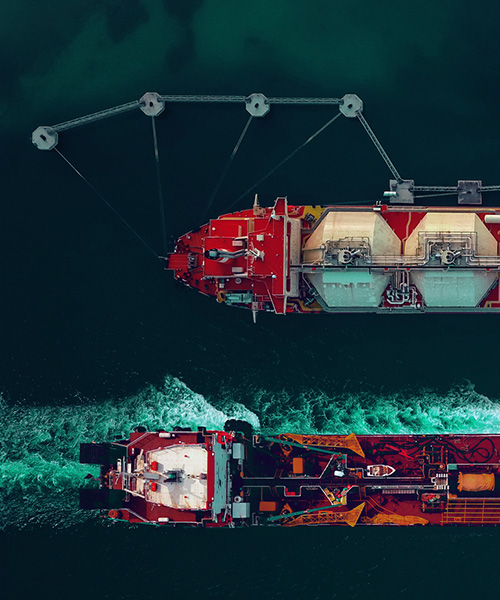
FPSOs, Floating Liquified Natural Gas (FLNG) and ‘old platforms’ dominate the asset focus, sitting at the intersection of cost, optionality and speed.
FPSOs continue to gain traction in the immediate term as a modular, repeatable solution that can quickly unlock resources, particularly in deepwater and remote scenarios. Meanwhile, FLNG is emerging as the medium- to long‑term growth area, offering a viable way to monetize smaller or stranded gas fields that wouldn’t justify onshore LNG investment.
Legacy platforms pose a different kind of challenge. “You've got platforms that have been out there for 30, 40 years. Are there enough reserves to extend life? Can you expand it – or is it time to decommission and exit?” asks Buck. These questions are no longer purely technical. They're portfolio‑level strategic choices that weigh reserves, costs, emissions and long‑term value.
4. From ‘digital transformation’ to operational performance
For years, digital transformation has been a recurring theme. But the conversation is changing, shifting from experimentation and pilot projects to demonstrable impact at scale.
“If you talk just in terms of digital transformation, you’re going to fail.”
Operators are now asking not just whether digital tools are available, but if they will have meaningful impact on reliability, decision‑making and asset performance.
Done well, digital capability is embedded into how assets are designed, operated and maintained. Real‑time data, integrated platforms and advanced analytics are helping operators improve asset integrity, optimize production and reduce unplanned downtime. But digital isn’t a one-off transformation. Those having success with it are treating it as an ongoing operational capability, evolving and learning alongside assets. “AI is a talent base,” Buck says. “You field it, you train it and you continually develop and update it.”
5. Redefining offshore with AI, robotics and remote operations
AI, robotics and remote technologies are no longer emerging concepts in offshore. They’re actively reshaping asset monitoring and management. Sub‑sea robotics, drones and AI are already improving safety, reducing inspection shutdowns and minimizing personnel exposure offshore.
While AI-driven analytics are being used to predict equipment failures, optimize well flows and plan maintenance with better accuracy, robotics and drone‑based inspection technologies are reducing the need for people to operate in hazardous environments. This means operators can conduct inspections without shutdowns and reduce risk exposure through semi‑autonomous systems. “You don't have to put people at risk to inspect flares, flare tips or check emissions along a pipeline,” says Buck. “That can be done with autonomous, semi‑autonomous or remote pilot drones.”
6. From site‑based delivery to globally connected execution
These technologies don’t just streamline operations; they support new models built around global teams. When expertise can be shared virtually across multiple assets and geographies, it allows for faster decision-making, better knowledge sharing and improvements in both costs and execution quality.
As Buck puts it, “In 2014, you’d put 400 or 500 people in an office at the customer site. If you had 10 projects, you had 10 offices. And they never talked to each other.” Now, with an increasing focus on mobility and globally connected teams, capabilities and communication are expanding. This leads to faster learning, increased efficiency and better consistency.
“You can have the same people working across multiple projects and apply learnings instantly,” says Buck. “Offshore is inherently a global endeavor. If you’re going to build, especially in the FPSO space, it’s global by definition.” And now, delivery models are beginning to reflect that.
7. Sustainability moves upstream into concept and design
Alongside offshore investment rebounding, sustainability considerations haven’t disappeared; they’re just being addressed differently. “Engineers will tell you what’s technically possible. Oil field engineers will tell you whether it's worth it,” says Buck. “Everything has a dollar value.” The emphasis is on practical, economically viable solutions, not abstract targets. Operators are prioritizing interventions like methane reduction, energy efficiency and designs that allow assets to progressively lower carbon emissions over time.
Technologies like CCUS, electrification and hybrid energy systems are no longer add‑ons or afterthoughts.
They’re being assessed during early concept selection, reducing future retrofit costs and preserving operators’ flexibility in the face of evolving regulatory and market pressures.
Building optionality into offshore means operators can protect long term asset value while still meeting near term production goals. Because when it’s done right: “You've built a resilient platform that can sustain itself over time,” says Buck.
8. What this means for offshore
This is more than a rebound; it’s a more mature phase of offshore development, defined by discipline, integration and execution excellence. The leaders of this next phase will be those that can integrate economics, engineering and delivery into a single operating system, balancing speed to market with capital efficiency, digital capability with operational reality and the near‑term returns with long term resilience.
“It really is a renaissance for offshore,” Buck says. “Not because we're going backwards, but because we’re applying new disciplines, tools and process to deliver more value.”