

August 20, 2026 • 4 min read
The resilient energy future of Asia Pacific
Different obstacles, common ambitions

David Bahr
The region has a range of energy stories, and the constraints to success vary across markets.
Unlike North America and Europe, the Asia Pacific (APAC) region has a wider variety of energy stories. It has several economic systems solving very different problems while sharing ambitions for resilient energy.
Some markets are capital rich and highly electrified but depend on imported energy. Others face explosive demand growth built on coal-heavy systems or are resource‑rich exporters attempting to convert natural advantages into long‑term relevance in a decarbonizing world.
Here, we use China, India and Australia as examples of how broader regional challenges are playing out in different markets. The different nations clearly show how execution constraints vary across governance models, market maturity and resource endowments.
Key takeaways
- China’s priority is to shift from system expansion to optimization; India’s is to invest to solve problems and meet demand growth; and Australia’s is to convert a resource advantage into deliverable projects.
- Grid access, not capital or technology, is a binding constraint across APAC.
- Projects that do not plan for infrastructure constraints risk stranding capital and eroding returns.
- Execution capacity in workforce, permitting and logistics is becoming a scarce resource.
China: Optimizing to meet additional capacity
China has been the world’s largest driver of energy investment, primarily as a tool of industrial policy and energy security. It is a central player in the global manufacturing and export of key technologies, including solar panels, battery energy storage systems, electric vehicles and electrolyzers.
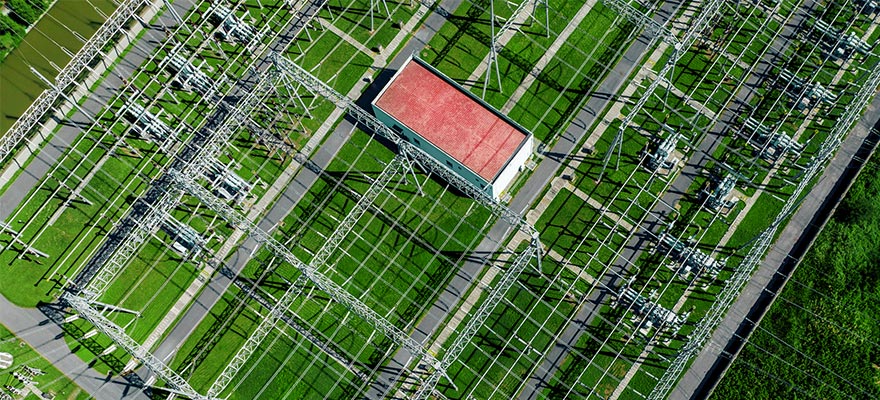
However, a massive increase in renewable capacity has outpaced the grid’s ability to absorb it. This has led to:
- curtailment of excess generation
- congested transmission corridors – particularly west‑to‑east lines
- suppressed wholesale power prices.
As a result, the business case for merchant power projects has weakened.
Over the next five years, we anticipate that China will shift from building new capacity to optimizing its existing system.
This includes higher-capacity transmission, grid‑scale storage, more flexible thermal plants, selective nuclear growth and generation linked directly to data center demand.
India: Balancing grid reliability with growing demand
India is seeing rapid growth in electricity demand, driven by economic expansion, electrification and rising peak loads. Renewables have scaled quickly because they are cheap and improve energy security. The coal market has not stopped growing, but it can’t keep pace with demand.[1] Reference 1
Looming challenges include chronic grid congestion, rising peak-demand risks and land acquisition. Over the next five years, investment will target these challenges while incrementally improving grid reliability. It will do so by growing renewables and deploying early-stage batteries while retaining coal capacity and natural gas, which is constrained by price sensitivity.
With those factors at play, we expect that India will broadly continue to prioritize reliability and affordability. The country will support this with policies that accept near-term emissions growth while keeping per-capita emissions far below Organization for Economic Co-operation and Development (OECD) nation averages.

Australia: Converting a resource advantage into deliverable projects
Australia is primarily an energy exporter and system integrator. Exports are anchored by natural gas and critical minerals, and the nation is positioning to supply hydrogen and ammonia as those markets develop.
However, domestic grid resilience remains limited, and permitting and social license risks are increasing. Renewable Energy Zone project announcements continue to outpace project delivery, constrained by approvals processes and landholder resistance.
Natural gas remains economically critical over the next five years, while hydrogen and ammonia depend on global market formation and long‑term offtake. It is critical for Australia to translate its resource advantage into deliverable projects without losing alignment with transmission, ports capacity and access, and community expectations.

Identifying constraints that cut across markets
Despite their differences, several common themes emerge across the markets in this region.
Grid access has become the most important bottleneck across APAC.
Capacity is being built far more quickly than transmission and distribution systems can accommodate, while rules for interconnection remain opaque, slow and inconsistently applied. Moreover, project operators often discover constraints only after committing significant capital.
Permitting adds to the grid challenge. Governance structures were never designed for system‑scale transformation and schedules can slip by years when assumptions fail.
Physical logistics also constrain delivery: ports lack heavy‑lift capability, roads are not rated for oversized components, and pipelines are missing or misaligned.
A common mistake is assuming infrastructure can be adapted later in the project lifecycle, but retrofitting often takes longer than constructing the energy assets themselves.
Beyond these factors, many projects fail because other critical inputs such as water availability, hydrogen supply and CO2 storage cap throughput. Utilities are treated as ‘standard’ inputs, feedstock supply is assumed to be flexible and import logistics can be underestimated.
The result is often stranded capacity or underutilized assets that appear technically successful but are commercially fragile.
Taken together, these constraints help explain why outcomes are likely to vary significantly across markets.
Assessing early for risk
Given these factors, APAC’s energy investments over the next five years will likely be uneven and highly differentiated. Outcomes will be shaped less by capital availability and more by discipline at key interfaces of grid and generation permitting and construction, feedstock assumptions and physical supply.
Workforce constraints add further pressure. Skilled labor is aging, sectors are competing for the same people and wage costs are rising. In many cases, there may not be enough people or resources to deliver projects at the required pace.
APAC organizations looking to make long‑lived energy decisions should prioritize early technical diligence and integrated planning. The benefits of risk mitigation far outweigh the upfront costs.
We work with our customers to identify and plan around key constraints from the earliest stages of feasibility through to project delivery. To start, test your approach and reduce future risk with our 2030 Energy Strategy Readiness Checklist.

David Bahr is a principal consultant at Worley Consulting with over 35 years of experience across the energy, chemicals and resources sectors. He focuses on industrial decarbonization – including CO2 capture and storage, low-carbon hydrogen and Power‑to‑X pathways such as sustainable aviation fuel and ammonia. David advises customers at the intersection of technology choice, execution risk and long‑term energy strategy. His work spans feasibility, front‑end engineering and strategic advisory, helping organizations identify where projects are most likely to stall and plan around those constraints from the outset.
[1] Ministry of Power, Government of India, “Power Sector at a Glance,” November 2025, https://powermin.gov.in/sites/default/files/uploads/power_sector_at_glance_Nov_2025.pdfReturn to reference 1
↩ Back to content